In harmony with nature
As you approach the Praglia Abbey you have the sensation of ridding yourself of frenzy and thoughts. A long straight road leads into the green countryside. The Euganean Hills on the horizon are approaching. All around there are trees, vines, fields, and slopes.
The great Benedictine monastery was built in 1080 in Teolo in the province of Padua and it is nestled at the base of Mount Lonzina.
But there is no contrast with the surrounding landscape. Rather, the juxtaposition produces a harmonious relationship. Man’s constructions develop in continuity with nature, without artificiality
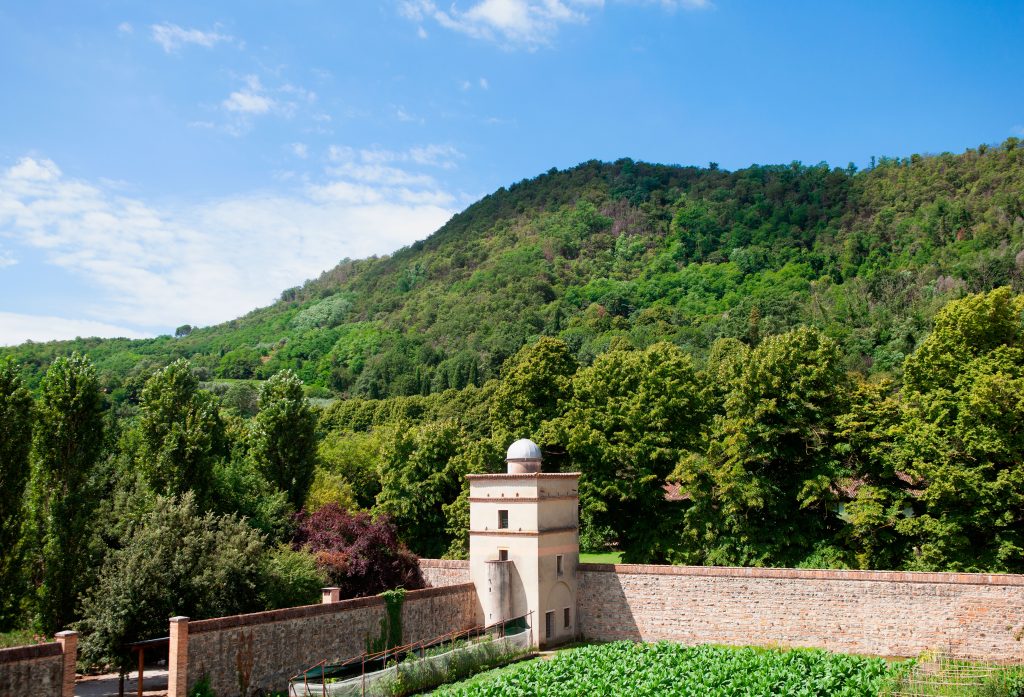
Today 40 monks live and work in the abbey and are involved in various types of work.
Each monk has a task given to them by the abbot and the rhythm of the days is still marked by the Benedictine rule.
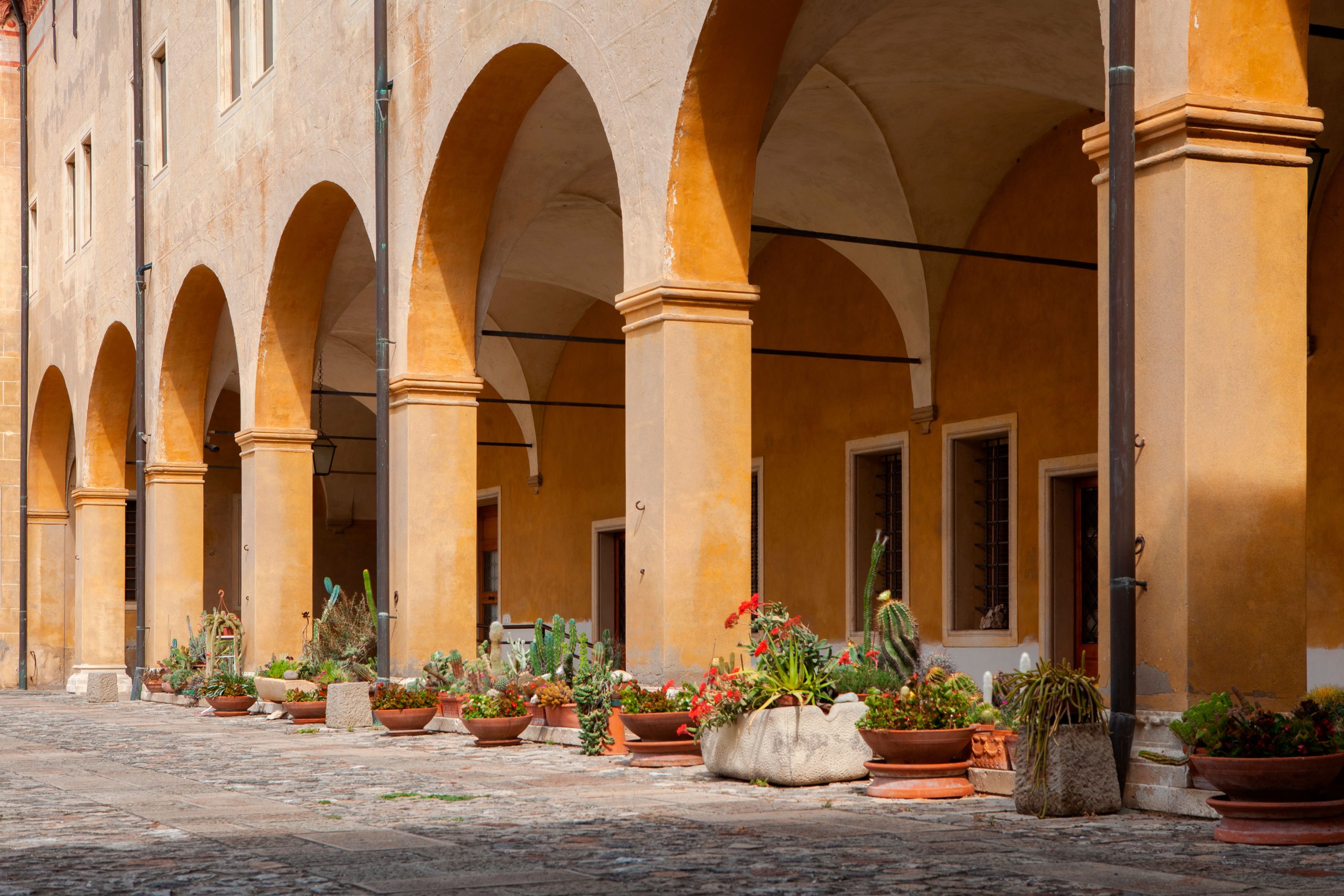
The various tasks take place around four cloisters: the rustic cloister, once reserved for agricultural activities; the botanical cloister, where medicinal plants were grown for the pharmacy; the hanging cloister, located on the first floor and intended for the collection of water; and the double cloister, around which the monks’ cells are arranged.
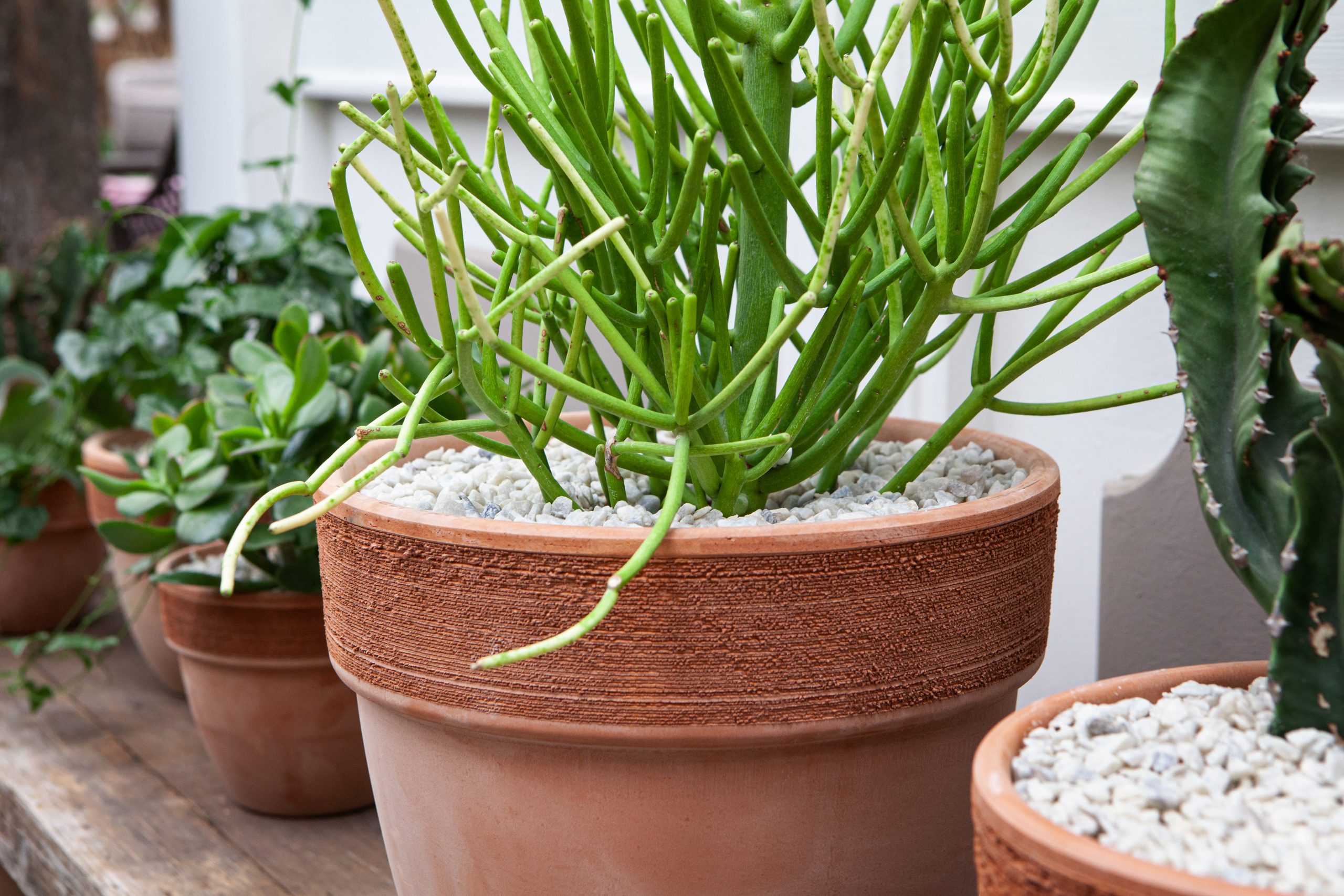
The wonderful succulents in terracotta pots
Father Daniele welcomes us and guides us on our visit to the abbey.
He tells us that when he arrived at the monastery thirty-five years ago, he brought his succulents with him. He’d already cultivated them at home, it was a passion he’d had since he was a child.
These wonderful plants are at least 35 years old, the oldest even 50.
Today they can be admired inside their terracotta pots. Others are planted in the ground. In summer, potted plants are located in the rustic cloister, while in winter they are moved to a more protected place and sheltered from frost.
Father Daniele is fascinated by the great variety of succulents, in shape, colours, ribs, thorns, and the order through which each one develops.
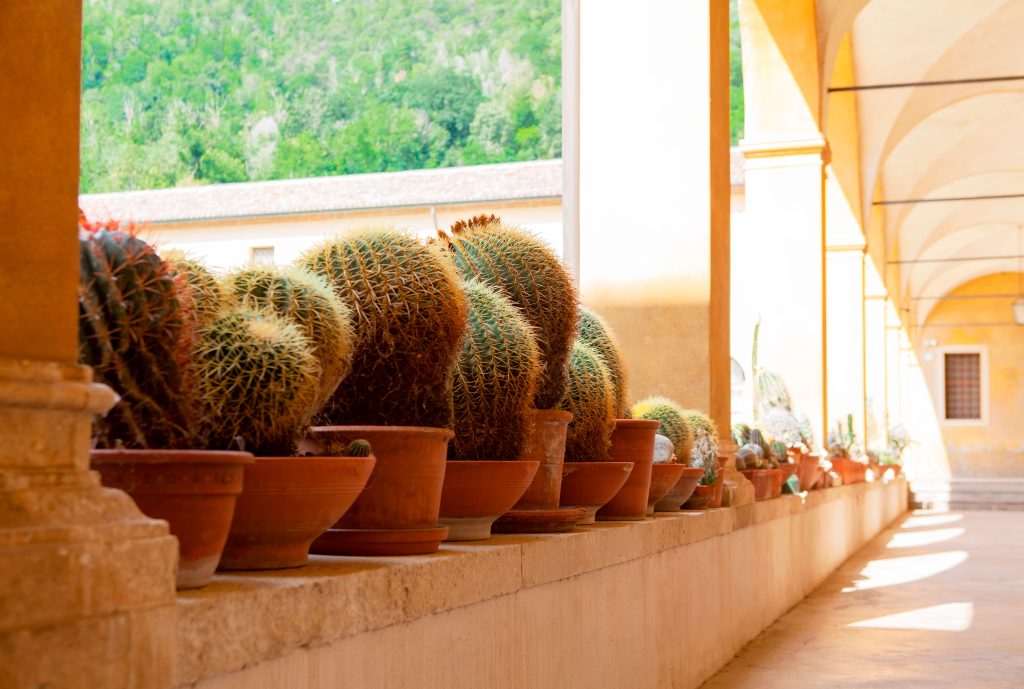
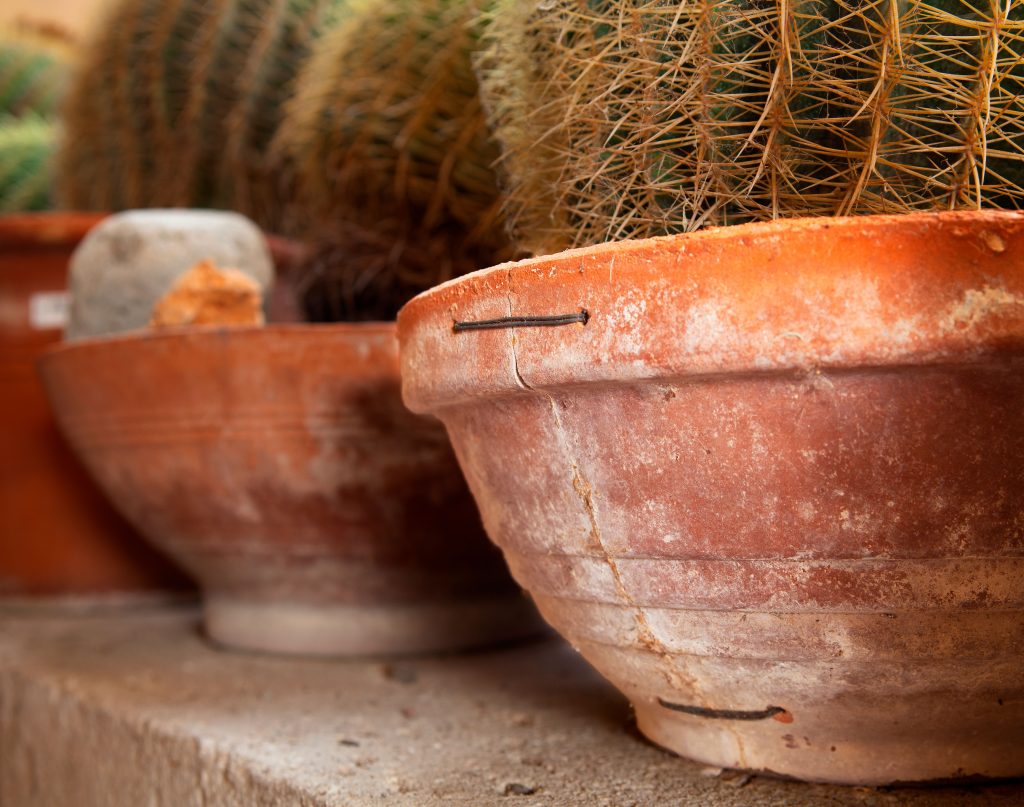
The terracotta pots in which they are found seem to tell their long history through the marks that time has left on them – the chipping, the cracks, the adjustments, the naturally aged colour.
Some are reinforced with wire, and it’s amazing how that makes them even more pleasing to the eye.
Like people, time leaves scars on the pots.
These pots bring the oriental aesthetics of Wabi-Sabi to mind, which are based on the acceptance of the transience and imperfection of things.
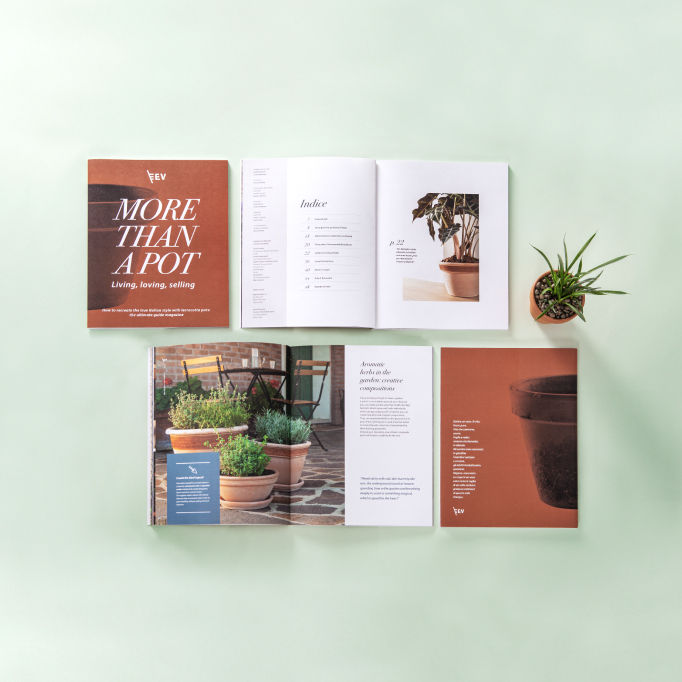
More than a pot
You can learn more about this topic and find many other interesting insights in our “More than a pot” magazine dedicated to terracotta pots.