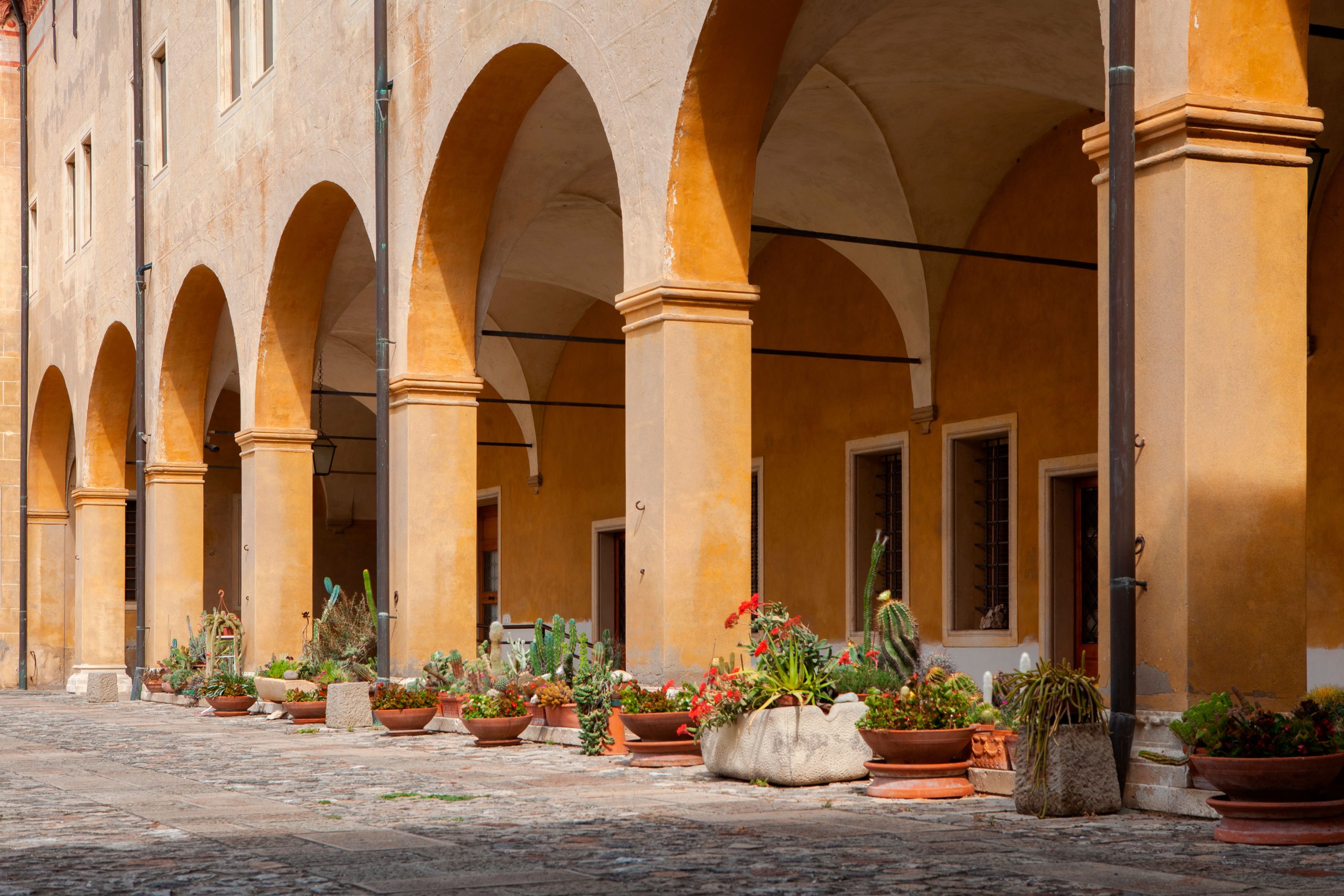
Succulents are native to warm countries. In nature they are found both in the nearby Maquis shrubland and in tropical or more exotic countries. The great variety of their shapes and the few simple rules to follow to take care of them, make them an ideal choice to recreate a corner that conveys that sense of warmth, harmony and rusticity that is typical of Italian homes and gardens.
The most correct name to use for these plants would actually be “succulent plants”. The name comes from the fact that they manage to retain the water that allows them to survive in very hot areas within them, resisting high temperatures and the prolonged absence of rain.
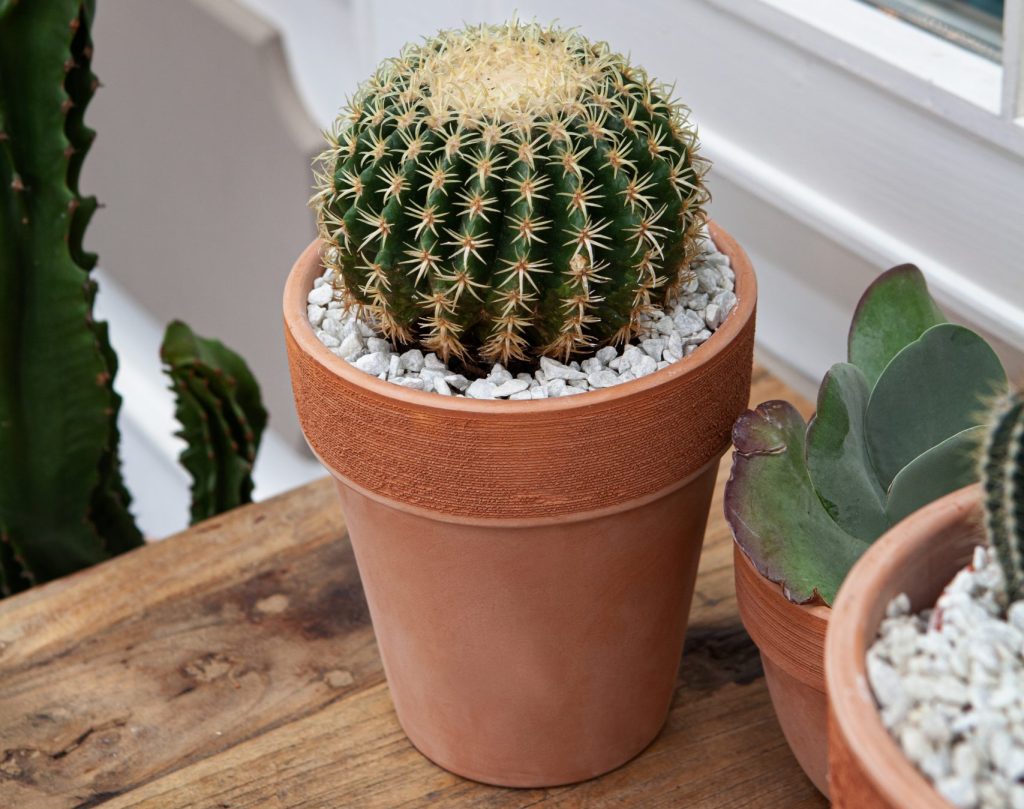
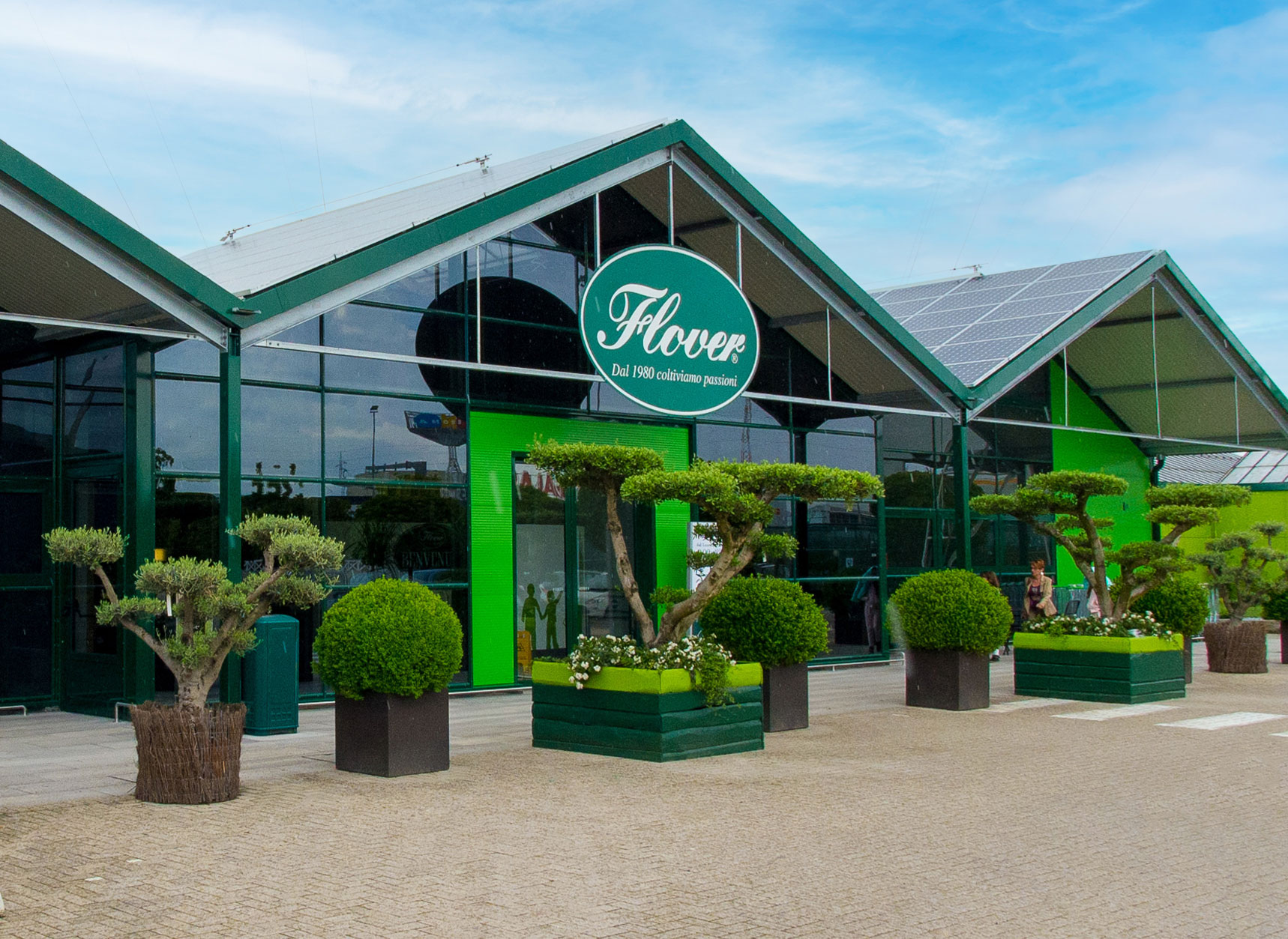
Flover, a garden centre in Bussolengo, in the province of Verona, hosted us to show us how, with some indications, it is possible to create compositions of harmonious and effective potted succulents.
Davide Filippi, an expert in compositions and plant department manager at Flover, accompanied us on this trip, showing us what measures to take for the compositions and the choice of pots.
The basic principle is consistency, or choosing simple pots following a criterion of similarity, to create a common base that, with its simplicity, gives space to the beauty of plants.This allows you to approach plants that are also very different from each other and then take advantage of the great variety of them.
The ideal pot for succulents is terracotta
First of all, you have to choose the correct type of pot. Succulents are usually sold in plastic pots, but once purchased it’s better to repot them. Plastic pots are waterproof and as such go against the nature of the plant.
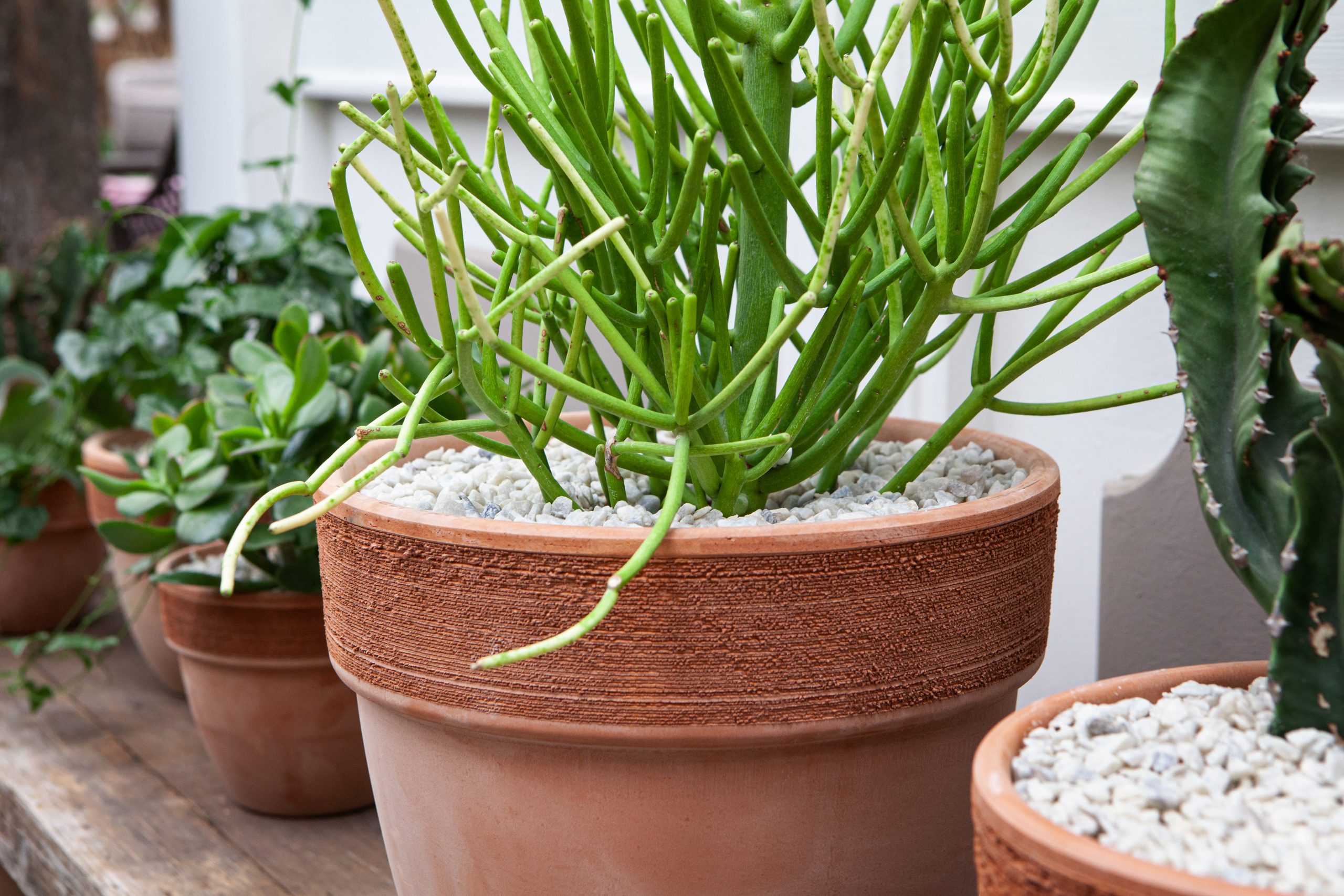
The best choice is always the terracotta pot because it guarantees the ideal transpiration of the plant and its root system. In addition, the rusticity of terracotta matches the plant well.
The size of the pot must be adequate to that of the plant to allow the soil to retain the right moisture. In a pot that is too large, the soil retains excessive moisture.
If too small, however, it risks drying out quickly.
The soil used must be composed of fine peat, and mixed with a high percentage of sand and pumice to create the necessary gaps between the roots that allow the proper breathing of the plant.
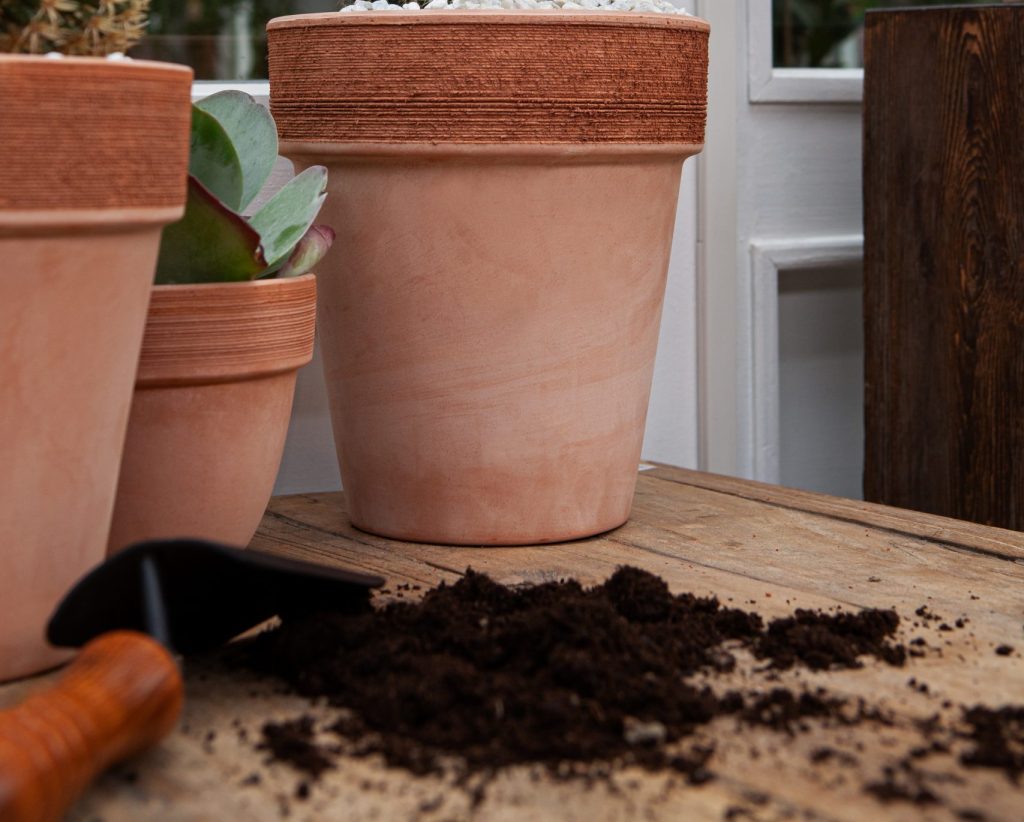
Pots of the same design and colour for the effect of a classic rustic style
To avoid generating awkward and confusing combinations, the easiest and safest choice is to use pots of the same design and colour. This way you can achieve consistency and unity in the compositions, and the eye of the beholder is free to focus on the particularity of the shapes and colours of the plants and blooms.
To avoid excessive monotony, you can play with the arrangement of pots of different sizes, creating a slight variation. The result will be very clean and capture the classic rustic style.
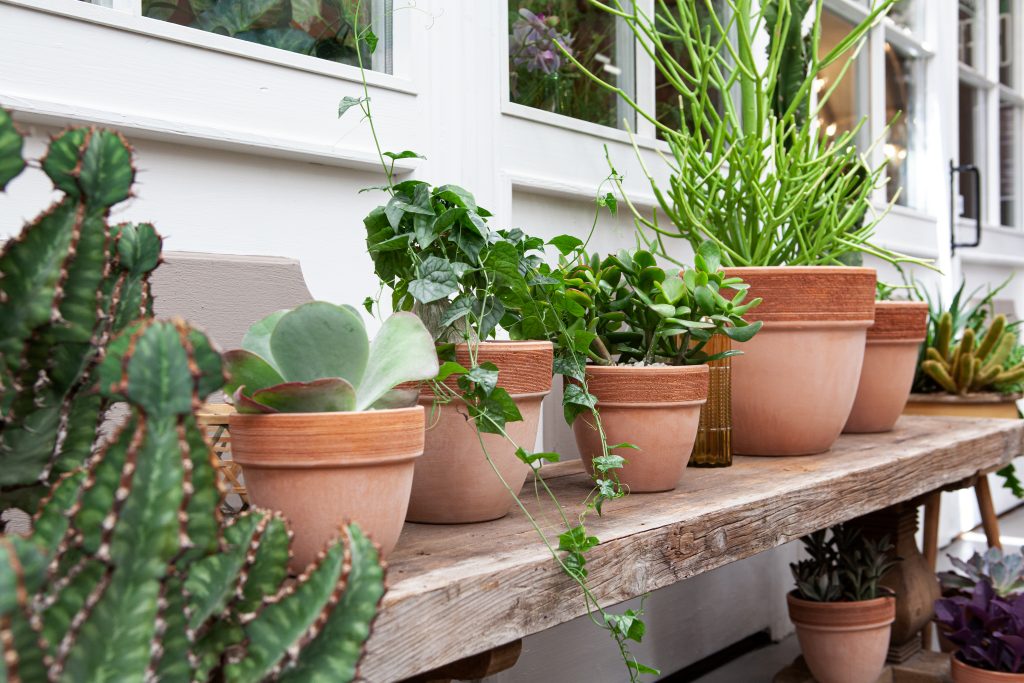
Different but consistent shapes add more movement
By changing the shape of the pots, you can add more movement to your compositions.
It’s a good rule, however, not to change colour and to seek a basic consistency also at the level of shapes.
For example, it is best to avoid placing square pots and round pots close together.
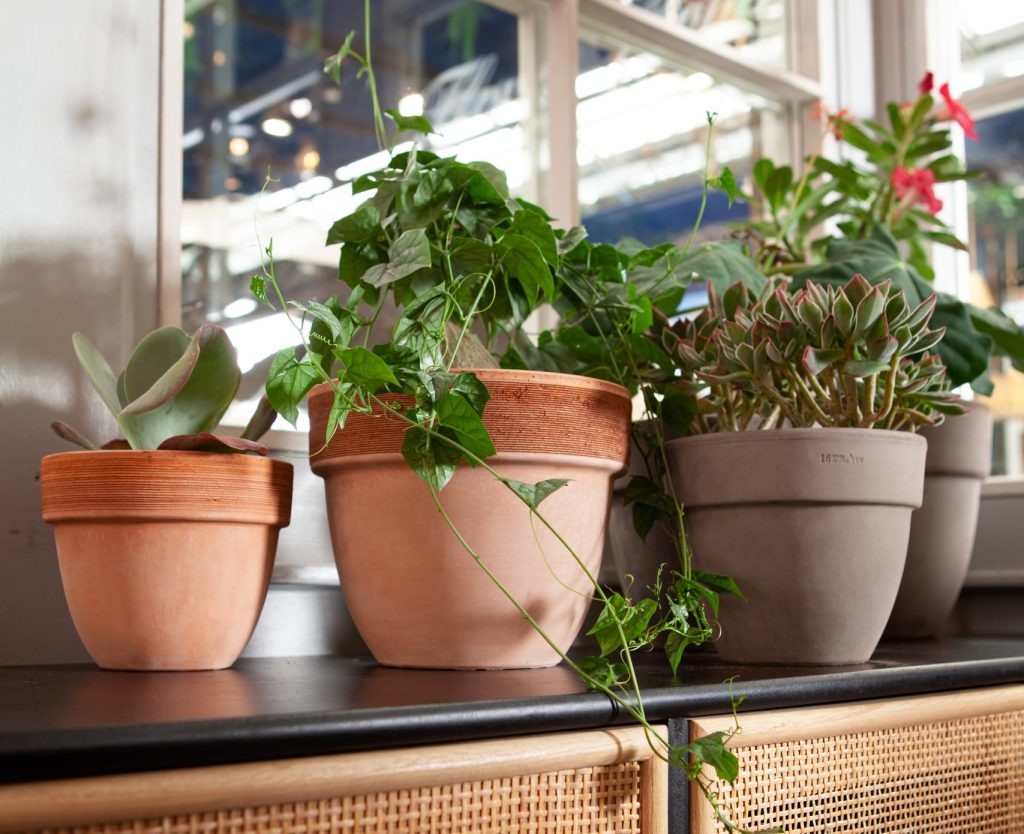
In the proposed composition only round, antique scratched pots were used, of which only the proportions change. Some are more elongated, others lower and cupped.
Following this simple suggestion creates a sort of common background from which plants emerge, the real protagonists. Pots should never steal their scene.
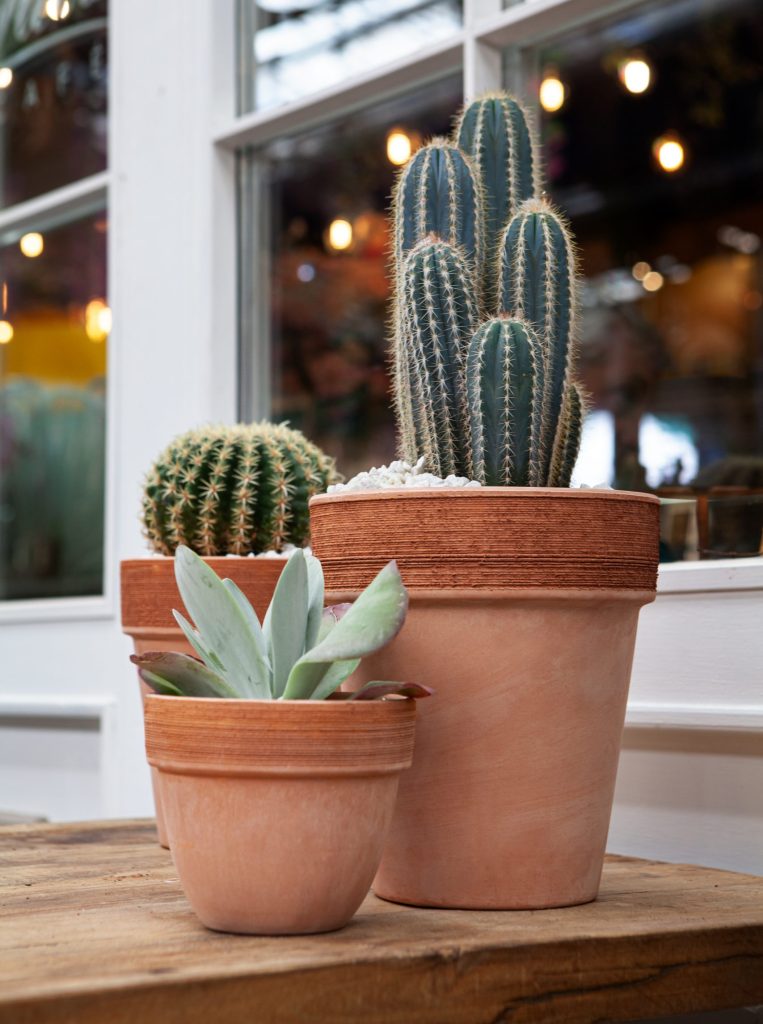
Combine pots of different colours without forgetting the overall effect
An alternative direction to follow is to use pots of the same shape but in different colours.
In the proposed composition, a round pot was chosen, with a slightly cupped profile, in antique and greige colours. The dimensions are also similar.
This search for coherence is not an end in itself but creates a starting point from which plants can emerge in their beauty. All the more so since they are plants with particular shapes and varied in shapes and blooms, as in this case, with broad leaves or tufts of rosettes, either erect or drooping.
In this suggestion, the shape of the pot is the common element that acts as a binder for the composition in an indoor environment.
It should be a space that is protected from frost and downpours, such as a corner of the house where succulents can continue to unleash their exotic charm even in the colder seasons.
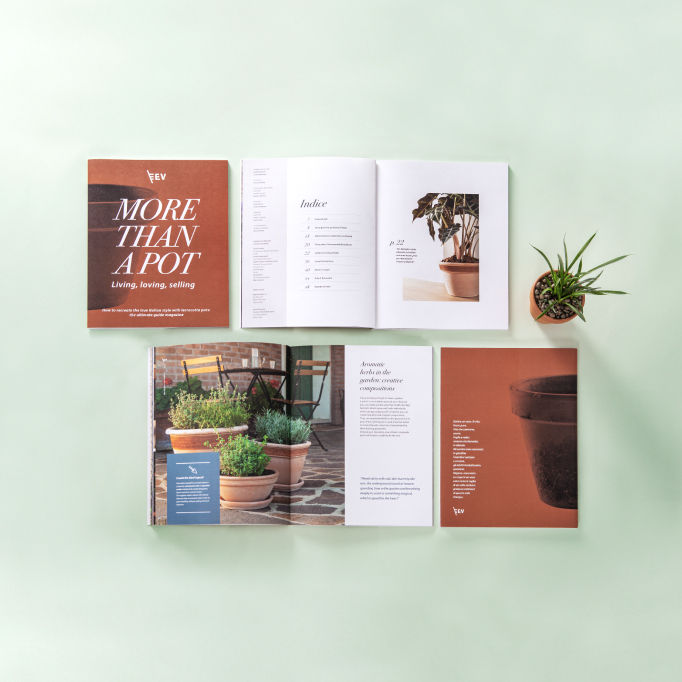
More than a pot
YOU CAN LEARN MORE ABOUT THIS TOPIC AND FIND MANY OTHER INTERESTING INSIGHTS IN OUR “MORE THAN A POT” MAGAZINE DEDICATED TO TERRACOTTA POTS.